


My smartphone use is on a constantly declining trend with a lower limit only set by an addiction to solitaire and similar games to zone out with (when going to the bathroom mainly, to add some TMI to a sentence already far too long to invite any of you to read further). The reason for the decline is the news. Specifically how it’s almost fully made up of an angry old white man, with the odd touch of discussions such as the value - or absence thereof - of autistic Barbie. The latter is not an unworthy topic at all. It is just not one where the opinion of this angry old white man is worth a lot. As to the former, well, I like my news to be surprising or enlightening - and everything about that angry old man is predictable and depressing. Just an age old playbook of fascism playing out through an otherwise inconsequential, mediocre individual that just was there for the taking by the cosmic dark force of protect-our-privilege-whilst-you-can. It is a lot like watching a 21st century digital remake of a film noir in high definition; reducing ‘film noir’ to shadowy movements in an otherwise almost pitch black background. And so I unplug, because the resistance is certainly not helped by constantly staring at - well - him. Nor will it be helped by people like me abusing some autistic Barbie debate to get more likes, see my post on epistemic Ozempic. So I unplug, except for the sports news.
The original title of this post was going to read: “Only sports can save this world!”. Then I realized that most of the not so very many readers of my posts would, most probably, not even start reading a post so entitled. At least this is how I think of you: as a set of intellectuals who, if faced with an upsurge in fascism, believe that the resistance can’t allow for something as futile as (watching, reading about, so on) sports. You will, or so I think, rather turn to debating the news and/or to activism. Anything but that trivial, emotional pastime in which one enjoys a game that consists of people running around or jumping up and down in order to basically try to beat the other side. I do apologize if I mischaracterize you. I apologize too if I don’t mischaracterize you. I am sure also in the latter case you do not begrudge me my pastimes, whether it is my solitaire or a nightly check of the stats of our 2 Belgian NBA players (go Toumani!, go Ajay!, please remember their names). You will certainly not begrudge me any of that if I explain you that my intense interest in sports stems from my father being a sports journalist - and me missing him, a lot, and compensating for it by avidly watching the game I knew he was covering. It is however not enough for you to not begrudge me my pastime. I need you to understand my stronger claim that: “Only sports can save this world!”.
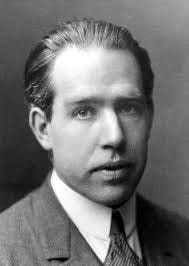
Let me explain why you really need to understand that only sports can save the world. Before I do that, however, I will first ramble on for about one 16-line paragraph why I use a picture of Niels Bohr in this post. This paragraph-long ramble does, by the way, serve a purpose in this post, but you are mine now and this purpose only reveals itself towards the end of it. Niels’ picture isn’t here for the obvious reason that his ideas are important to me and should be important to you (for that, see this post). No, he is here because Sander once made an AI image morphing my image with this one of Bohr. Its result looked eerily close to an old image of my fathers. Why not use this resulting AI image here itself? Two reasons. One: my father liked his privacy. It is about the game. Not about the individuals playing it. He hated idolizing athletes. He was close enough to them to know how this led to self-idolization and turned them into spoilsports. If it becomes too serious then the sports experience itself is spoiled. That experience is an experience that needs to remain playful. It requires passion, in the full knowledge that almost anything about sports is a matter of chance: the rules, the talent, who happens to be playing on which side, the sheer luck of who happens to be injured or not at the time of the game, … Sports is serious during the game. Afterwards we have a beer.
So much for keeping my ramble to one paragraph. Reason two: I don’t use AI, because each time one uses it a tree dies. Worse: one risks to contribute to the imminent death of some concrete body. This death will probably make it neither to the news nor to our social media feeds because of our collective addiction to that angry old white man (and this is also his real function: to divert us from the factual injustices of the world). I also do not use it because I do not want to plug myself into it if I can help it (increasingly, I cannot help it, as Google does not cease to remind me of). It is not that I have a qualm with AI as new technology. Far from it, technology is cool. I just refuse to plug myself into the current brute-force-AI which that angry old man loves for the obvious reason it allows world-domination. If AI is to become smarter, it will only achieve this by doing its thing with less resources. There’s no play for world-domination in that though, but, not to worry, the world hates being dominated so tech billionaires will go bust. As we speak people are already developing AI-as-a-technology-of-resistance - and it is this AI that will carry the day and make our world brighter. Such AI develops in the shadows, with minimal resources and maximally playful attitudes. Just like the next sports stars are developing somewhere where passion and talent happen to find each other.
This is exactly why only sports can save this world. We need play to survive, just as we need food. Some of us need it in the form of philosophy or art. Some of us are not that intellectual and need it in another form. A play for (world-)domination negates play as it subordinates play to survival. Sports captures the essence of play and captures it in a way that is accessible to all. And that’s what we need: a way to compete that cannot be reduced to domination. A way to jointly have fun without negating others to have fun. Sure, philosophy and art can do this too. Just like knitting or cooking can do it. These are, however, not things in which everybody can join, and sports is such a thing. Maybe some of you now feel like they cannot be forced to join in the emotion which is sports. Or worse: maybe some of you feel like everybody should join in the emotion of art and philosophy. The latter, though, is just like saying everybody should be into cooking or knitting or, say, patriotism. The former, on the other hand, is just denying that you are moved by sports. And denying you are moved by sports is eerily close to the arrogance of thinking yourself as beyond the need for play. If you think you are beyond this need for play, you risk to want a world where a specific type of individual - a smart one, or a strong one, … - dominates the world; and this is exactly what we want to get over!
I hear you thinking ‘Does sports not divide people rather than unite them?’. There’s no denying that the emotions of supporters are sometimes expressed in violent ways. The problem here, however, is a problem of a lack of sportsmanship. The problem is to put survival before play; to make winning more important than competing. A prerequisite of the emotion of sports is that the adversary can share the same emotions. This is why sportsmanship requires fair play, abhors unfair advantage and structures itself in ways that allow all sides to have a fair shot at becoming the best. There is no doubt fascism tries to abuse sports, like that angry old white man tries to now. The thing is they can never succeed. Diversity, Equity and Inclusion are required for the shared emotions of sports. Everybody needs a shot at competing. Sports squares the circle of identification with common roots and universal all-inclusive participation. This was the function of the Olympics for the Greeks, and in a de facto globalized world it is what can bring all of us together as having the common root of being human beings. It allows us to have our roots and not be fixated on one or another essence in them. Look at Toumani and Ajay, perfectly representative of Belgium precisely in the diversity of their roots. This is how we celebrate diversity, by identifying regardless of having some shared essence.
It is quite probable that I did not convince many of you. I believe some of you will say changing the world is a serious matter and sports is simply not serious enough. At the same time you might be allergic to those who take sports too seriously - and therefore are (made) blind to the seriousness of the injustice in the world. Maybe you want us to focus on the various serious issues created by that angry old white man. I understand. Still, isn’t a large part of the problem that we are forced to focus on serious issues? That we are led to believe that the issues are urgent and that solutions need to be nigh? Why shouldn’t we celebrate together as a global community the diversity inherent in us? If sports will save the world, it’s precisely because it’s both serious enough for us to come together as a global and diverse community and not serious enough to make it the hill we want to die on. The last I want to do is to downplay global injustice. I, however, do firmly believe that to live is to play and to play is to love each other. Sure, it seems we will have to join the resistance, and that is a serious matter. There is however no need to become as gloomy as that man - constantly talking about threats and opportunities. We can resist and be merry, these are perfectly complementary things to do. We resist, for example, by globally celebrating in sports the diversity that they want us to deny.
(Whilst writing this post, my good friend Ruediger Kortmann died. Finally finishing it I realize I will not have the opportunity to discuss this with him. He is already missed. I miss him. Let’s all be more like him in not wanting everybody to be alike.)