


Faced with all kinds of emergencies, the temptation is to find philosophy just trifling. A luxury we can ill afford. What we need is action. Preferably of a kind that is swift and decisive. This opinion is, of course, itself thoroughly philosophical in nature. There was a time emergencies did not call for action, but instead called for contemplation. Prayer, ritual, diversion; it matters little in what form such contemplation came. Global emergencies anyway are a quite recent phenomenon. A phenomenon - so much is certain - that is unthinkable without philosophy of some kind. And the kind of philosophy that now prevails is the philosophy that calls for action and, in calling for action, denies its own condition of possibility which must be contemplation. You will probably not be able to make heads or tails of the previous couple of sentences as it all feels very much like a dog constantly swirling around, wanting to bite its own tail. Luckily, you have come across a post that explains once for all why our heads are both spinning and our tails are between our legs. Philosophy is our most essential activity precisely because it is something we cannot not do and because doing it inevitably puts at risk our entire world. It is both the ultimate poison and the only antidote to that poison. Such is the human condition: we are, as Nietzsche called it, sick animals who have finally succeeded in inflaming Gaia, as Stengers should have called it (given our world is clearly now running a severe fever). What to do? Surely to philosophize, as we cannot not do it. But how to philosophize given the risk of further destroying our world? Well, let me tell you.
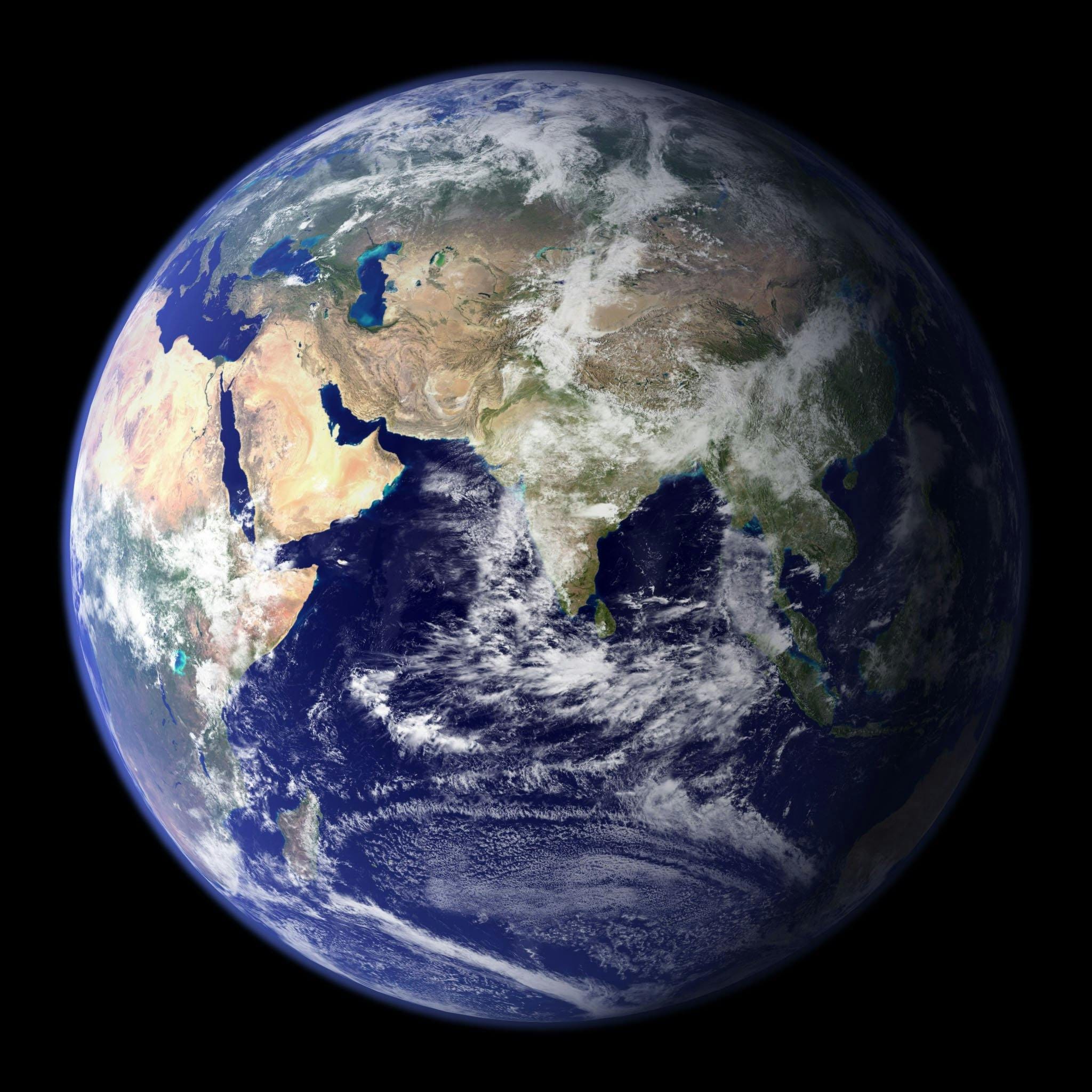
As I tried to explain to my students the complex word for all this is homeostasis, the burning desire of a living system to continue to be alive. A simple example of this basic phenomenon of complexity is our body temperature. We burn a lot of energy in order for that temperature to remain at or around 36.9° C, since a human living system evolved to function best at such a temperature. We are far-from-equilibrium systems. We are conceived in heat, to only reach equilibrium at death as dust, after becoming unable to regulate our temperature. This is why we are an infection on the face of this world: we have a tendency to be so hyperactive that it disrupts the homeostasis of our Earth. It is only in this sense “Gaia” is to be understood, the only likeness of Earth to a human being is that it, too, is a living system trying to maintain its homeostasis. We inflame her in exactly the sense of creating a fever, and it is quite possible she exorcises the infection to keep on living without us - tiny microbial agents - bothering her simple living arrangement as a collection of sympoietic living systems. But how do we create this inflammation? Well, by being the sick animals that we are, we are continuously restless. Instead of just sleeping in a climate adjusted for us, we make a fire so as to take the climate adjusted to us, with us. That’s about it, really. In our restlessness to, autopoietically, develop ourselves we use the energy stored in this world to increase the size of our human world. It’s a sickness unto death, this hungry need for the energy that will sustain our homeostasis over the whole wide world, burning so much energy that it literally sets this world aflame.
This, our, sickness is nothing else but philosophy of course. The philosophy that leads us to words like sympoiesis and autopoiesis. The very same insane philosophy also that made us look into a fire instead of running away from it. And so allowed us to conceptualize fire as the type of thing that can be made and harnessed, instead of being tied to the instinct of being a threat to our homeostasis that needs to be fled. An instinct that is an individual instinct; an instinct of an autonomous individual that reproduces the conditions for its own survival as the living being it is. In a word: autopoiesis. An instinct only counteracted by the material limits to reproduction which are that there is no reproduction in solitary confinement, meaning that all reproduction presupposes coproduction. Before you think of sex, just think back of those first man-made fires: no production of fire without wood. No human beings without Gaia being in a certain mode of homeostasis. In a word: sympoiesis. Now you can think of sex as a way of caring for what is not you, because without what is caring for you there could not be a you in the first place. And if you think of sex as separate from such caring then it is this type of sex that really exemplifies the sickness of the human animal: a desire to dominate, to take whilst not giving back, to have one’s autopoiesis without the constraints of sympoiesis. These two words - autopoiesis and sympoiesis - are the words of any philosophy. They are the yin and yang of the philosophical drive. Harnessing fire but respecting the wood. Following traditions but breaking free of them when they disempower an individual’s right to restlessness.
And here philosophy bifurcated into the Western view of autonomous freedom and what we Westerners were taught to see as non-philosophy, mere tradition and, in this view therefore, just religion. And this Western view gave birth, not to science as such of course, but to a sort of science that purified knowledge based on abstractions allowing technology to be built that controlled our environment. And that control - breaking free of the constraints of sympoiesis, maximizing the autopoietic industry of the self-made man - led to digging up the earth to find fossil fuels. More and more until inflaming Gaia. My point is for sure not to demonize science and technology. My point is to highlight a one-sided impatience of this (abstr)action-oriented way of philosophizing. Not because it leaves sympoiesis behind, the actions of the West (the very notion of the West and the East) speak loudly to the fact that this philosophy is one that thrives on coordinated action of nationalism, on conquest and being civilized. No, because it sanctifies competitive autopoiesis against concrete calls for care and mutual concern. It is a new tradition, but a tradition all the same: the tradition of walking under a flag of wanting to dominate the world (remember what I said above about sex). A Western domination that has in fact already materialized through acceptance of Western philosophy and science as what needs to guide action (if only in order to retain some autonomy in one’s indigenous tradition). And it is only this philosophy of human hybris that can (and is) destroying this world.
The simple solution to this sad situation is to just take the other horn of the bifurcation. To go for tradition and sympathetic sympoiesis. But if it is the bifurcation that is the problem - and it is the problem - then taking the other horn is just accepting Western bullishness. No, what is needed is to stay with the trouble. The trouble with philosophy is that it wants to be either/or, but it needs to be both/and. Autopoiesis and sympoiesis. Listening to the elders and opening up to the new ways of the young. Action and contemplation. This trouble will stay with every philosophy, just like the sickness unto death will stay with the human animal. The point of the post is to start taking philosophy with a grain of sugar - remember that only sports can save the world! - in not expecting it to come up with final answers or with definitive truths. There is room enough for tens of billions of restless humans without creating a rush to prove a point - and to whom would humanity have to prove a point? So let’s take it slow and enjoy our smart phones smartly and give Gaia her time to respond in kind. All will be well if we pay respect to what enables us to be restless and use that restlessness to care for others instead of getting caught up in just trying to come out on top. The only urgency in the climate is to realize that we have to stop impatiently rushing into actionable solutions. The reality is we should do like our elders: take it slow, enjoy the game, cook slowly, sleep when we are tired, make room for the animal inside us. Because it is not only Gaia we are inflaming, we’re all running a mental fever and, at the rate we are going, we will by war finish ourselves well before Gaia can.